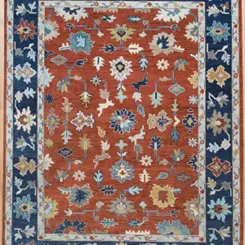
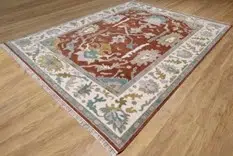
any size. any colour. forty days from the day you approve the colour.

Rug Materials Comparison Guide: Wool, Jute, Cotton, Polyester & More

Do you struggle with figuring out how rugs of various materials differ from each other? They look different, they feel different, but how exactly would that play out in your own home? As professionals, we have years of experience backing us up! So Check out our rug materials comparison of wool, jute, cotton, & synthetics rugs. Find the best rug materials for everyday use!

Rug Materials Comparison Between Wool, Jute, Cotton, Polyester

When it comes to the best rug materials, four names stand taller than all others. Wool, jute, cotton and polyester are all excellent choices! However, they each have their weaknesses, while also having unique strengths! So let’s look at the pros and cons of each of our star materials!

Wool Rugs: Rugs that Last Decades

Wool RugsWool Rugs Pros

  • Texture: Wool, be it a sweater, muffler or a rug, is about the softest fabric you can ever get. Who doesn’t want that fuzzy feeling under their feet?
  • Warmth: Wool is naturally an excellent insulator, and can maintain a comfortable warmth during the cold months.
  • Durability: Wool is also an extremely durable material, and we have seen well-kept, quality wool rugs last for decades without losing any of their glory!
  • Resistant: Wool rugs have excellent structural integrity, and are both flame-resistant as well as stain-resistant!

Wool Rugs Cons

  • High Price Point: Wool rugs are a premium rug material, and as such are out of budget for many buyers. However, their durability also makes them something of an investment! For further details on this, check out the ‘Hand-knotted Rugs’ section of our blog: ‘Hand-Knotted vs Machine-Made Rugs: Pros, Cons & How to Tell the Difference’
  • Initial Shedding: Wool rugs may shed for the first few months of use, which makes them less appealing as a short-term purchase.

Jute Rugs: The Natural Aesthetic

jut rugsJute Rugs Pros

  • Natural Materials: Jute is as natural and eco-friendly as any fabric can be. It’s the best material for the environment.
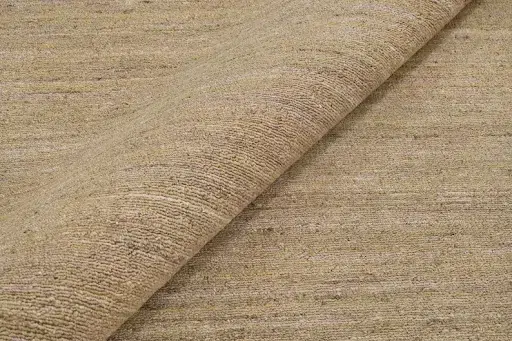
  • Neutral Palette: Jute rugs have a light beige, sandy, earthy colour palette, which is a prime foundation for neutral, minimalist room designs! The ‘Warm Earth Tones’ section of our blog, ‘Best Rug Colors for Neutral Interiors: Warm Up Your Space with Style’, teaches you how to use this to full effect!
  • Cost Efficiency: Jute rugs are a budget option, and one of the best rug materials for a quick and easy purchase!
  • Lightweight: These rugs are extremely light, and very easy to move around the house. An excellent choice for first time users to learn, experiment, and mix and match!

Jute Rugs Cons

  • Coarse Texture: As aesthetic as Jute is, it doesn’t feel very great to the touch. The coarse, rigid feeling underfoot is not for everyone.
  • Absorbs Moisture: A rug that absorbs moisture may not sound like a bad thing. But it means the rug can lead an extremely short life in high-moisture areas. Keep your jute rugs away from kitchens and bathrooms!

Cotton Rugs: Something for Everyone

cotton rugsCotton Rugs Pros

  • Lightweight: Cotton rugs are the most casual rug material. Efficient in every way, they’re also very lightweight and thus, easy to move!
  • Budget-friendly: Cotton rugs are widely available at discounted rates. Great for a quick and easy purchase!
  • Design Variety: Cotton also allows for the most variety among printed designs. There’s something for everyone!
  • Machine Washable: Cotton rugs are often machine washable, making them very low maintenance.

Cotton Rugs Cons

  • Low Durability: Cotton rugs wear out much faster than wool or jute, and should not be expected to last decades.
  • Colour Fading: The colours on cotton rugs are prone to fading with time, especially with heavy sunlight exposure. Place them mindfully and away from your windows!

Polyester Rugs: Natural vs Synthetic Rugs

polyester rugs natural vs synthetic rugsPolyester Rugs Pros

  • Affordable: Polyester Rugs are an incredible choice to get great benefits at low cost. These machine-made rugs are designed for efficiency!
  • Wide Range: These synthetic rugs mimic different fabrics, like wool or silk. As such, there are a wide variety of textures, colours, shapes and sizes available for them!
  • Stain Resistant: Polyester rugs have a solid resistance to stains, which makes them longer lasting than natural budget options for rugs.
  • Soft Feel: These rugs are designed to maximise feel. They are soft to the touch, and very pet and kid-friendly!

Polyester Rugs Cons

  • Taste-dependent: The Natural vs Synthetic rugs debate continues to rage on, as people rush to defend their own interests. This makes the attraction of synthetic rugs rather subjective, despite their undeniably great qualities!
  • Flattening: In high traffic areas, polyester rugs can get flattened, which affects both feel and aesthetics. They’re simply not as durable as a material like wool.

Other Common Rug Materials Comparison

other common rug materials comparisonSilk Rugs

  • Pros: Shiny and luxurious, they also have a great feel!
  • Cons: They’re delicate, and should be limited to low traffic areas.

Nylon Rugs

  • Pros: Excellent durability, they can last for several years!
  • Cons: Being a synthetic material, nylon is not accepted by all as a great rug fabric.

Seagrass or Sisal Rugs

  • Pros: Same as ‘Jute’, a good, natural fiber with earthy tones.
  • Cons: Has a rough feel underfoot.

Some Great Pet-Friendly Rug Materials

pet friendly rugs materialsBest Choices

  • Wool: This stain-resistant material is excellent for messy pets.
  • Cotton: Easily washable, great for the same reason as wool.
  • Synthetics: Polyester and nylon are both affordable, low-maintenance and soft on the paws.

Must Avoid

  • Delicate Materials: Silk or any other delicate material will get torn apart by your pets. Buy one which has a fighting chance!
  • High-pile Rugs: High-pile rugs can create a huge mess with our furry friends, as their fur and even dirt can get trapped within the fabric. Prioritise easy-to-clean rugs to not lose your temper on your little furballs.

The ideal rug material for you, thus, depends on your specific needs and priorities. Wool may have caught your eye, or perhaps the efficiency of polyester has charmed you. Every single material has something to offer, and the one thing we can’t deny is that they’ve all historically gained much praise across the world. So, be sure to choose whichever one you love!

FAQs On Rug Materials Comparison

Que: What are the best rug materials for durability?

Ans: Wool is by far the best natural rug material for durability. A quality Oushak can literally last generations! For a more accessible option, nylon also boasts excellent durability, and is the strongest among the synthetic options!

Que: Are natural rugs better than synthetic rugs?

Ans: It is more than a matter of taste, as both provide different kinds of benefits. Natural rugs are much more breathable, offer an eco-friendly appeal, and produce a more organic visual. Synthetic rugs are optimised for efficiency, and so they’re durable budget options. For a more detailed explanation, check out our related blog: ‘Hand-Knotted vs Machine-Made Rugs: Pros, Cons & How to Tell the Difference

Que: What rug materials are pet friendly?

Ans: As discussed in the ‘Some Great Pet-Friendly Rug Materials’ section, wool, cotton and synthetics are the best rug choices for houses with pets.

Que: Which rug is easiest to clean?

Ans: Cotton is the easiest to clean, as these rugs are often simply machine washable. Put it in and forget about it! The next great choice would be polyester, as they resist stains and spills better than natural fibers.

Que: Are jute rugs good for homes?

Ans: Yes! Jute rugs are an excellent budget choice for homes, especially when going for a neutral, minimalist colour palette! The main issue you may face is their vulnerability to moisture, but as long as you keep them in the dry parts of your home, you should be good to go!

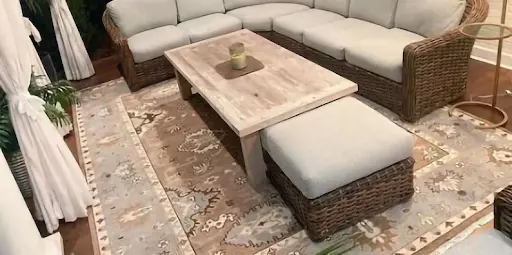
Rug Size Guide for Finding the Perfect Rug for Every Space at Your Home

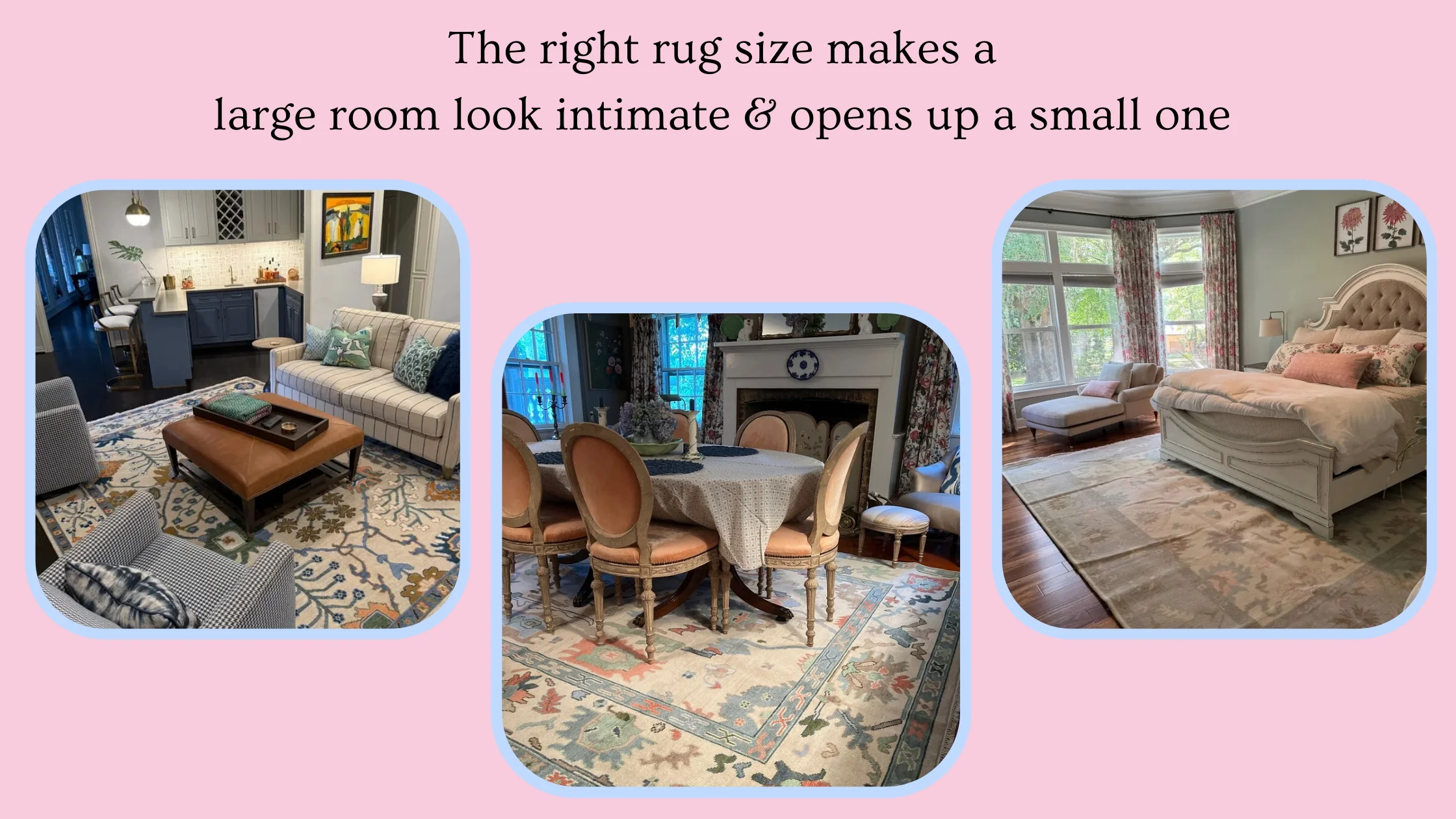
Confused about rug sizes? Our easy rug size guide & chart shows the best rug dimensions for living rooms, bedrooms & dining areas. A rug-size guide may sound like an unnecessary manual to follow. After all, every room has different dimensions! Yet, pieces of furniture, which determine the layouts of every room, tend to have very standard shapes and sizes. Which means there are some common rules of proportions used by designers around the world!

Living Room Rug Size Guide

living room rug size guide

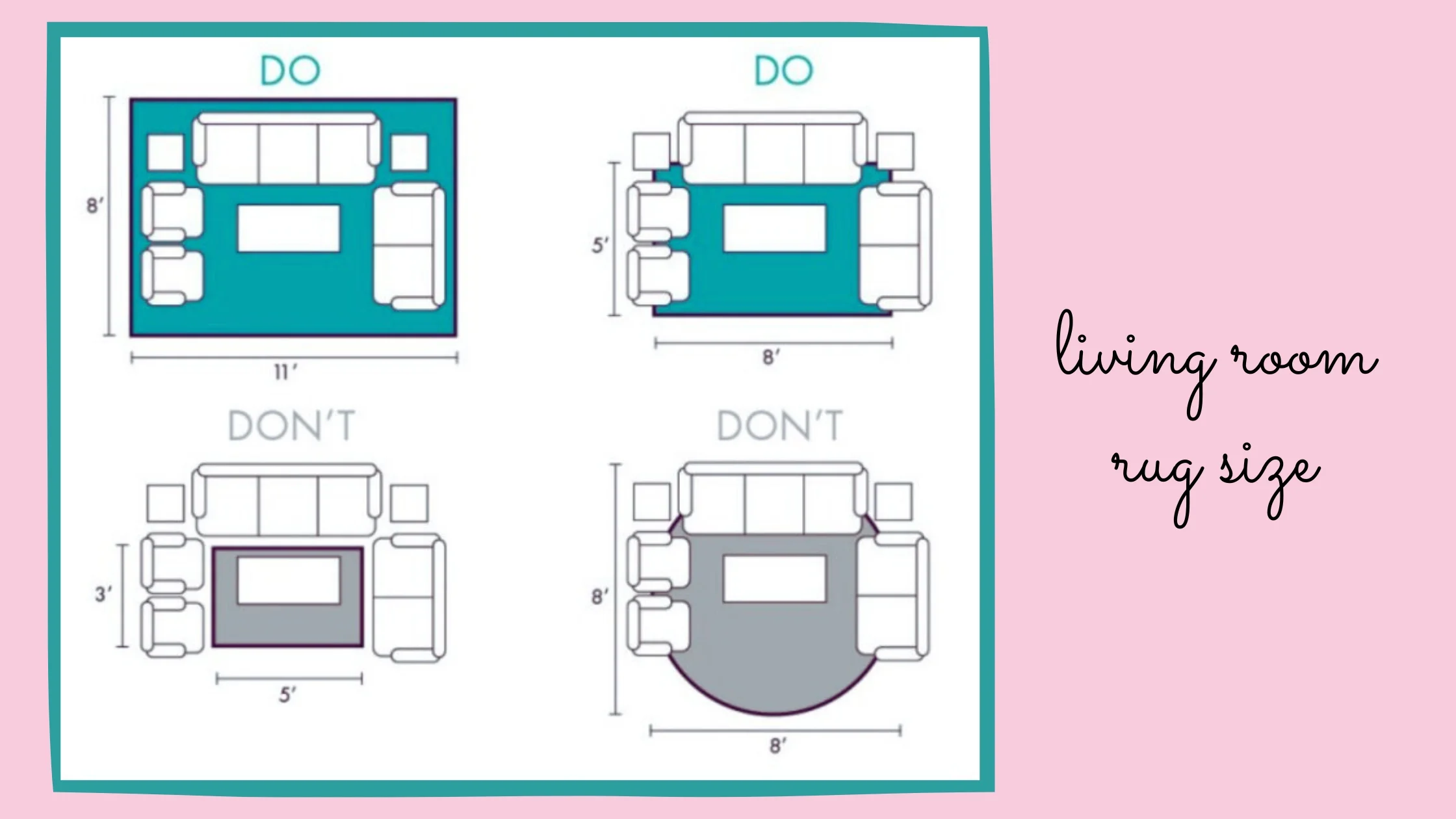
Choosing rug size area for the living room is perhaps the most difficult out of all the rooms. This is because these rooms are where rugs perform a very important aesthetic function, they designate the seating area. Every piece of furniture affects the rug size, and too small a rug will make everything look floaty. To avoid this, some standard rug sizes used by professionals are:

Rug Size Chart for Living Room

  • 12’x15′: These are huge rugs, and can seem intimidating at first. However, their ability to add cohesion to large living rooms or open-plan layouts is unparalleled. Every piece of furnishing sits fully on this rug, and the produced effect is one of formality and luxury!
  • 9’x12′: These are the standard sized rugs, for standard sized living rooms. Your sofas and perhaps your coffee table are best placed fully on top of this rug.
  • 8’x10′: As the room size gets smaller, the functions of rugs change, and these rugs mark this point of change for living rooms. Fully placing your chairs on them can create an awkward, cluttered visual, especially if the rug itself has intricate designs. Instead, place only the front legs of your seating on them, and the rugs will add instant sophistication and personality to your layout!
  • 5’x8′: The smallest of the living-room cousins, these rugs are great for small-sized rooms or apartments. Follow the same principles as the previous size, and keep only the front legs on. This can make the room feel bigger and fuller, an effect which goes a long way in smaller houses!

Bedroom Rug Sizes for King, Queen & Twin Beds

bedroom rug sizes for king queen and twin beds

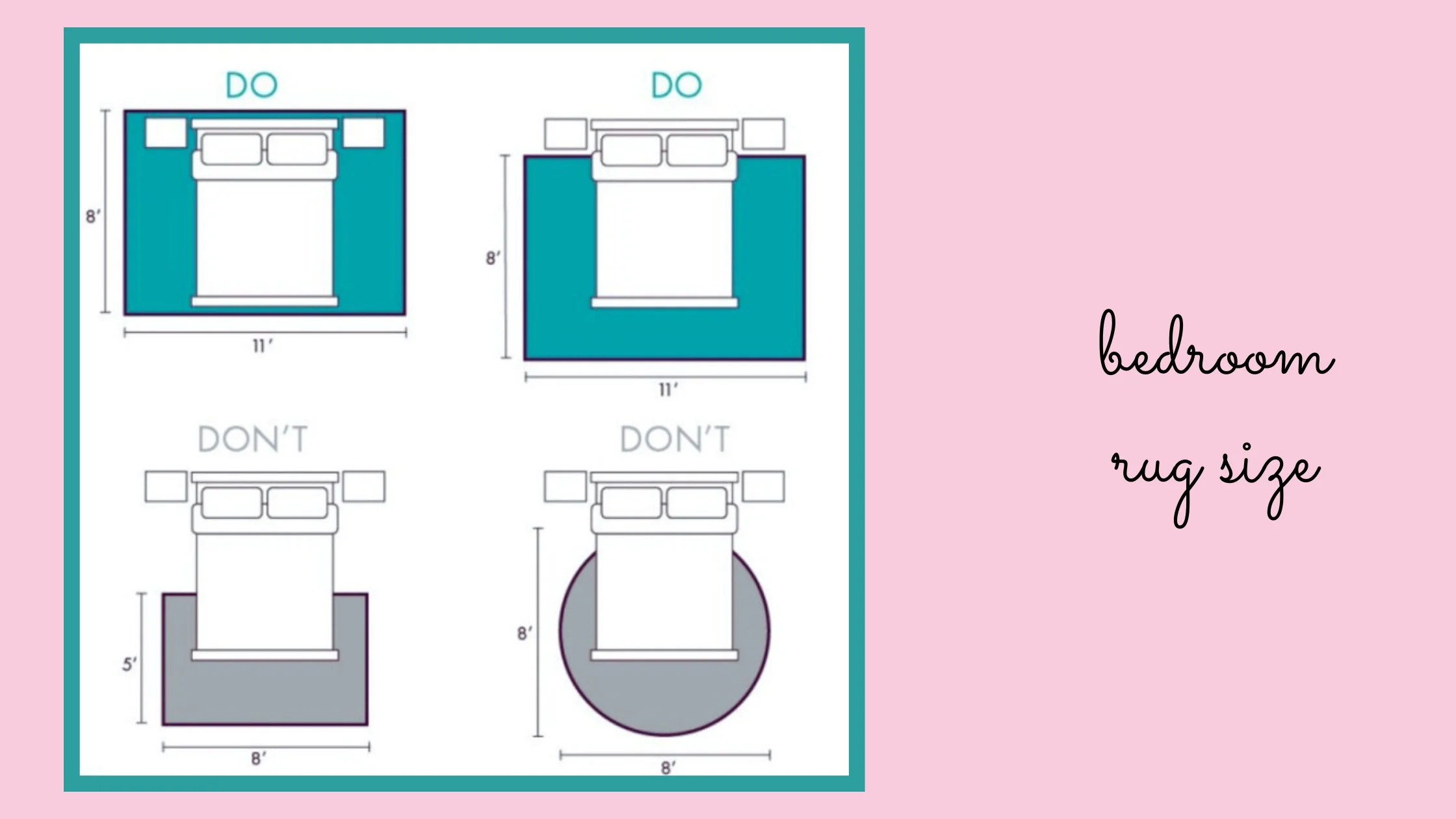
Bedroom rug sizes are a much simpler business, as they depend almost entirely on the size of your bed. The aim is to have a soft rug which extends on all open sides of the bed. This not only creates a striking visual, but also provides comfort to your feet whenever you step in or out of your bed! Standard rug sizes for these rooms are:

Rug Size Chart for Bedroom

  • 9’x12′: These vast rugs make the perfect match for a king-sized bed. A sign of luxury and taste, these rugs extend well beyond the sides of the bed, stretching beyond even your bedside tables and nightstands! They are generous, proud, and extremely comfortable, and the right choice for a large bedroom.
  • 8’x10′: This is the size of choice for rooms with queen-sized beds. The rug extends by 18 to 24 inches on all sides, which creates a near identical effect as its larger cousin, but occupies much less space.
  • 6’x9′: This is the most common rug size for the standard full bed. It leaves just enough rug length on all sides for all-round comfort and aesthetic pleasure.
  • 5’x7′: These small rugs are for the small twin-beds, and are the most compact way to create the same visual and practical effect as the large rugs, even in the smallest of rooms. Going any smaller means the rug won’t extend past the feet of the bed, which is strict no as the rug would be neither visible nor underfoot.
  • 2’6″ x 8′: A workaround for the abovementioned issue, especially useful in small rooms with twin-beds, are runner rugs which run along the sides of the bed. These are tasteful choices which provide comfort on both sides of the bed, consequently creating an elegant symmetrical effect which is pleasing to the eye!

Dining Room Rug Size Guide

dining room rug size guide

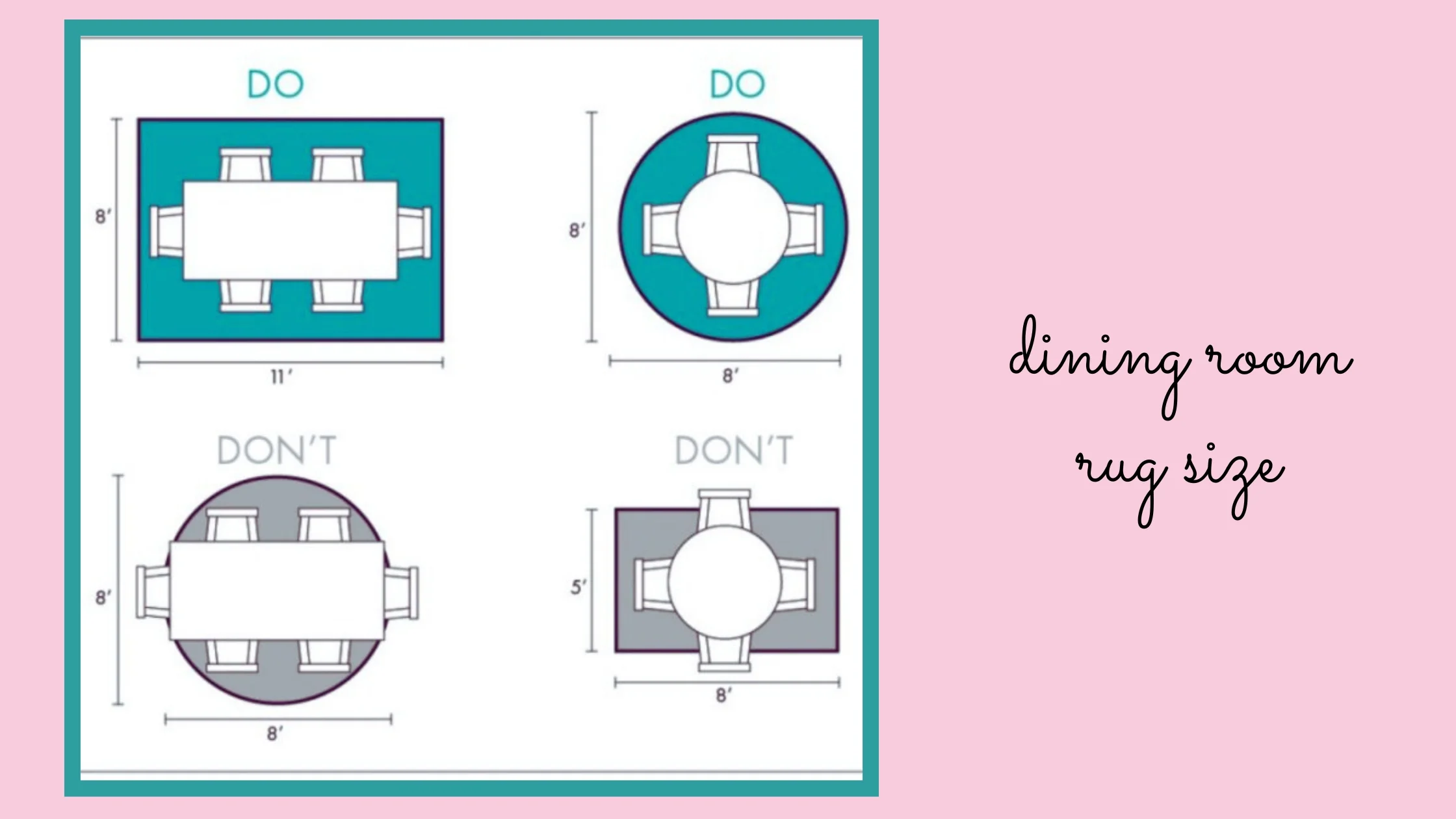
Dining room rugs mainly serve two functions beyond the aesthetic ones. They must be easy to clean, hide crumbs well, and stretch well beyond the sides of the table and chairs so that the seating does not clip at the edges when being moved. This last function is almost exclusively concerned with the rug size, and so, here are some standard sizes:

Rug Size Chart for Dining Room

  • 9’x 12′: While dining room rugs can go even bigger, this is a standard rug size for a huge table fit for 8 to 10 people! Perfect for large gatherings and showing your flair with luxury!
  • 8’x10′: As the table capacity drops to 6 to 8 people, the rug size requirement drops ever so slightly. The function of rugs does not change with size in dining rooms, thus, so your aim really should be to simply match the minimum requirements of your table and chairs.
  • 6’x9′: Fit for a table with 4 to 6 chairs, this rug is the perfect companion for a cozy family dinner. Remember to match the shape of the table, however, with all rug sizes, as a mismatch can make the entire room feel unplanned and erratic. For additional information on this shape consistency, check out the ‘Dining Room’ section of our rug placement guide.

This rug size guide enables you to outfit your rooms with the perfect rugs for you! Remember, these are guidelines, not strict rules to always be adhered to. These tips help you avoid the common mistakes others made before; however, your creative spirit knows no bounds, and if you decide to take a different path, we fully support you

FAQs on Rug Size Guides

Q. What size rug for a queen or king bed?

Ans: As mentioned in the ‘Living Room Rug Size Guide’ section, 12’x15′, 9’x12′, 8’x10′ & 5’x8′ are the standard rug sizes for most living rooms. Choose one based on your specific room size requirements!

Q. What size rug for a living room?

Ans: As mentioned in the ‘Living Room Rug Size Guide,’ the standard rug sizes include 12’x15′, 9’x12′, 8’x10′, and 5’x8′. Hence, pick the size that suits your room best.

Q. Why use a rug size guide?

Ans: 5’x7′ for small spaces, 8’x10′ for medium to large living rooms and bedrooms, 9’x 12′ for open-layout living rooms, are the most standard rug sizes.

Q. What are normal area rug sizes?

Ans: In most cases, a 9’x12′ rug fits a king bed perfectly; likewise, an 8’x10′ rug is ideal for a queen bed

Q. How big should a dining room rug be?

Ans: 9’x12′, 8’x10′ & 6’x9′ are the standard dining room rug sizes. For more details, you can refer to the ‘Dining Room Rug Size Chart.

Q. Where can I find a rug size chart?

This blog is a detailed rug size chart fit for most of your needs. You can download the Rug Size Guide Chart PDF for a more compact version

Rug Placement Guide for Every Room: Living Room, Bedroom, Dining & More

Rugs, despite seemingly taking the least amount of space in your house, are probably the most interactive bit of furnishing of them all. You walk on them, you sit on them, your kids play on them, and they fill any room with colour and vibrancy! However, not every rug placement is suitable for every kind of room, and so here is a detailed rug placement guide, to maximise your pleasant interactions with our best rugs!

Living Room Rugs

living room rugsRugs in the living room aim to perform three functions: add warmth and comfort, define the seating areas, and use their designs or themes to unify all pieces of furnishings. Due to this vast array of goals, these rugs are often the starting point for designers when preparing their overall blueprints for living rooms. Here are some rug decor tips based on room size that you should abide by!
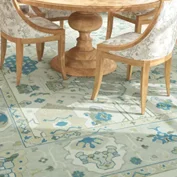
  • For Large Rooms: Large rooms are often wanting for colour, and regardless of how much you may clutter them up with sofas, distances between furnishings remain. Rugs in these rooms aim to fill the area with warmth and comfort rather than designate specific areas, and so your sofas will benefit more with all four of their legs sitting comfortably on the rug! They make for very cohesive seating zones!
  • For Medium-sized Rooms: As the room gets smaller, the aim of the rug also gets more focused. Naturally you would want to place your rug under furniture, but people often forget that they don’t need to be entirely beneath your sofas. In fact, only having the front-legs of your seating on top of the rug, creates a very intentional, nuanced appearance, while also saving heavily on costs!
  • For Small Rooms: The smallest rooms call for the most focus on the main event, which for living rooms, is mostly the coffee table that sits at the center. Being the most visible part of the room, having your rug placed here creates dimension with minimal cost and space consumption, making it the ideal placement for such rooms!
  • Other General Tips: Each rug is designed to serve a certain purpose, and so, consider buying a rectangular rug for a two-dimensional seating area, or a round rug for a circular one. Also ensure that the rug is at least as wide as the sofa, or you risk creating an awkward red-carpet image which does not convey comfort. Finally, use these rugs to add texture to your room, perhaps with detailed Oushaks for maximum effect!

Bedroom Rugs

Bedroom rugs also serve three major purposes: Add comfort and softness underfoot, visually anchor the bed, and balance the overall vision of the room. Unlike living rooms, however, bedrooms are often not designed to have a lot of floor space, and as such their advantages are much more functional than stylistic. Majorly, there are three kinds of bedroom rug layouts!

  • Under the Bed: The easiest and accordingly the most popular of the layouts, bedroom rugs work great when placed directly under the bed. This visually separates the bed from other furniture, while also providing softness on all sides of the bed. Key things to remember here are that the rug must absolutely extend beyond the feet of the bed, by around 18 to 24 inches, so that you actually get the visual and physical benefits of it.
  • Runner Rugs on the Sides: This is a more cost-effective rug layout for bedrooms which also allows for much easier maintenance. Having long, lean rugs on both sides of the bed, or simply one side if the bed is against a wall, serves every function expected of the rug with unparalleled efficiency. You get the softness underfoot, you get the visual nuance, and you don’t have to lift the entire bed any time you wish to give the rug a good wash! It’s a great choice for small rooms or tight budgets!
  • Foot of the Bed: If sacrificing the convenient access to fuzziness under your feet is acceptable to save costs, this rug layout is the way to go! Placing a small, bench-length rug near the foot of the bed creates an almost royal appearance, which is too good to pass up on. The downside is of course, most people leave their beds from the sides, and not having the warm rugs underfoot immediately is often a deal-breaker, but this layout is still the way to go for cost and space efficiency!

Dining Room Rugs

Dining Room RugsWith dining rooms, rugs aim to frame the main table, and your main concern should be that they do not obstruct the movement of the chairs. Certain things to note here are:

  • Keep All Chair Legs on the Rug: This is absolutely essential, as the chair can catch on the edges of the rug while being moved. Purchase a rug that extends at least 24 inches beyond all sides of the table, so that no chairs ever find their way to an edge!
  • Shape Consistency: For dining rooms, the shape of the rug is determined by the shape of the dining table. This means a round table demands a circular rug, while a rectangle matches a rectangular one. Only potential risk in this formula comes with oval shaped tables, as they prefer rectangular rugs as opposed to oval ones.
  • General Tips: Flatweave rugs are best for dining rooms, as they allow for maximum movement for the chairs. Meanwhile, indoor-outdoor rugs are most resistant to spillage, and easier for cleaning. Keep these in mind, and focus on efficiency in spill-prone households!

Rug Placement Guide for Other Rooms

  • Rug Placement Guide for Other Rooms

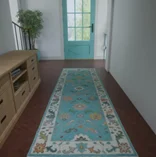
    Hallways: Runner rugs placed on non-slip pads are always the ideal choice, unless you intend to choose a welcome rug simply at the entryway. Remember to choose a dark colour though, as it can help in hiding dirt which naturally collects via heavy traffic.

  • Kitchen: The aim here is softness, not appearance. As such, runner rugs extending across the sink and the stove, or small rugs just beneath the sink, can both be perfectly functional choices! Get a washable, indoor-outdoor rug to maximise efficiency, and you have the perfect rug to fulfil all your needs!
  • Outdoor Seating on a Patio/Deck: Follow the same principles as the dining room rules to the tee. Just add weather-resistant materials to your list of concerns and you’re all set!

Beyond all these rules, are some general principles like leaving space between the rug edge and the wall to create visual contrast and dimension, use rug pads to maximise rug life and prevent slipping, and use flatter rugs for high-traffic areas, leaving the plush all for you and your own bedroom. Follow these rug decor tips, and you are fully capable of finding the perfect rug to furnish your perfect home!

Hand-Knotted vs Machine-Made Rugs: Pros, Cons & How to Tell the Difference

Every debate has two sides, even ones which seemingly should have very clear-cut winners, pun not intended. The cushiony world of rugs is no exception to this rule, and when it comes to you buying the right one for your house, knowing both sides of these debates is essential. Hand-knotted vs Machine-made rugs is one of the most long-standing debates in this field, and the winning argument has shifted between the two throughout history! So let’s perform a rug quality comparison, get an understanding of the pros and cons of both of these rug types, and figure out which is the perfect option for you!

Hand-Knotted Rugs: Pros and Cons

hand knotted rugs pros and cons

Pros

  • Durability: Handmade rugs are made with techniques honed across history, applying principles of weaving which were created well before human life became as cushy as it is today! Every individual tuft is hand-knotted and pure fiber, meaning even the modern artisan or restorer can always bring back the rug to its original quality. Even its materials are ones which promote bounce and resist soiling, which ultimately, makes for a rug that will last for generations!
  • Authenticity: For some, irregularities in weaving can be seen as a negative. But at the highest grade of purchase, the unique ‘signatures’ of the weavers, be it from certain themed motifs or even some popular imperfections, make their rugs the most coveted in the markets. These can include signature weaving techniques or preferences of the artist, which mean a lot to design professionals, and such authentic value is lost entirely when a rug design is mass produced to perfection.
  • Value Retention: Handmade rugs combine a golden trident of value, with time, skill and scarcity! Producing these rugs requires an artist with decades of experience, plus months’ work on actually weaving it together, which means a sole weaver can only produce so many during their lifetime. Add to this the fact that these rugs can be repaired easily, and they instantly become more than just a piece of furnishing. They become the softest investment you can make and get excellent value for it!

Cons

  • Price: Value retention naturally only plays a role once you already have the rug. Until then, you have to pay the premium value yourself, which isn’t exciting for many buyers! Handmade rugs require massive investment of time and skill, and are accordingly the most expensive ones on the market. At least they’re still value for money!
  • Production Time: If you need a rug now, or perhaps even in the coming week, your options in handmade rugs become instantly limited. While many such rugs are available for purchase on the market, getting one custom-made for your needs can take several weeks, or even months.
  • Irregularities: As mentioned in the authenticity section, irregularities are a negative for some buyers. These rugs are coveted for their imperfections and personality, which may not work for you if you already have a personality in your mind! Go for machine-made if you want a very specific design, like a football team logo!

Machine-Made Rugs: Pros and Cons

Pros

  • Affordable: Machine rugs are designed specifically for the markets, and as such, they sport significantly lower prices as compared to handmade rugs. If you don’t want to worry much about other factors and simply want a rug in your home, these can be the right choice for you!
  • Quick Production: Machine production of rugs has evolved to such a degree, that computers can more or less print out any custom design required for your personal needs. Moreover, any design also comes with a large number of copies, meaning finding replacements if ever required is also a very easy task!
  • Precise: Machines are designed to be perfect, as they simply lack the code to produce anything else! The rugs prepared by them are thus absolutely faultless, which gives guaranteed value for money, while also allowing for purchases of multiple copies, which is extremely useful for design professionals as they create their own signature styles with consistent pattern choices.
  • Variety: Since these rugs are easier to produce with whichever colour or design the market desires, the options for purchase are also plentiful in the machine-made section! You can find nearly every design and colour combination imaginable in these markets, meaning the one which specifically works for you, is bound to be somewhere out there!

Cons

  • Low Durability: Unlike handmade rugs, which are bound by complex weaving techniques and pure fiber, machine rugs use adhesives to fulfil their purpose. Adhesives can powder or dry out with time, causing its fronds to separate at the edges. These are not durable rugs, they were never designed to be, so be mindful of the same when you enter the market yourself.
  • Synthetic Feel: Machine-rug materials like nylon and polyester, designed to be stain-resistant, do not breathe nearly as well as wool, leading to reduced softness. They can also feel plasticky underfoot, which is the sacrifice paid for lower maintenance costs.
  • Low Resale Value: Time, skill, scarcity, these rugs are designed to require minimum amounts of all three of these. Accordingly, these rugs have little to no resale value, with even that only diminishing with use. These are need-fulfilling products only, and should not be considered as investments.

Hand Knotted vs Machine-made Rugs: How to Tell Them Apart

  • Look at the Back: Hand-knotted rugs would have an almost mirror image on their back, with the individual knots and warps visible to the eye. A machine-rug would instead have either a cloth or a latex coating, and its back would look like a pixelated mesh.
  • Perfection: The fringes of handmade rugs are not only intentional, they are structural, and a consequence of the production process which made them. The mass-produced twin does not have such a requirement, and as a result would either not sport loose fringes at all, or feature them as only a decorative element.
  • Label: The rug would often come with its origin attached to it in the form of a label or a tag. However, marketing terms can be deceptive, and you need to ensure that you don’t fall prey to dubious wordings like ‘hand-tufted’, which implies a tufting gun and glue backing. Stick to ‘hand-crafted’ or ‘hand-knotted’.
  • Price: If you find a handmade rug available for cheap, that’s an instant red flag. These rugs all come with long histories, either of the artisan or the rug itself. If the price is suspiciously cheap, the rug almost always has robotic origins!

Thus, the differences between handmade and machine-made rugs are night and day! The former is a piece of art, the latter, a product of market demands. There are use cases for each, and so there is no definitive answer as to which is better. What is important, is that you are aware of all of these factors when you enter the market, so you can find the perfect rug to fulfil your specific needs!


Best Rug Colors for Neutral Interiors: Warm Up Your Space with Style

When it comes to interior design, specifically for neutral interiors which have recently gained a ton of popularity, people often misunderstand the point of maintaining neutral colour schemes and end up filling their homes with tones of beige. You may have a passion for styling minimalist rooms, but it is important to know that neutral does not mean dull, and that even the minimalist design can have its own flavour when done right! So here are some of the best rug colours for neutral interiors!

Warm Earth Tones

rug colors for neutral interiors warm earth tonesConventionally embodying the symbolic colours of the Middle East, warm earth tones include terracotta, rust, ochre, beige, sand and olive. These colours have a universal effect on all who lay their eyes on them, they calm the mind and soothe the soul. These grounding, natural colours lay muted, stimulating the viewer as little as possible while still providing aesthetic pleasure. Key points to note with these earthy tone rugs are:
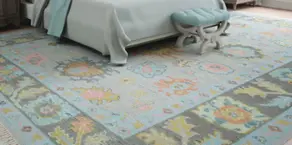
  • Colour Palettes per Rooms: These colours go incredibly well with each other, allowing you to pair them up with common furniture colours. As such, terracotta or rust-colored Oushak rugs can compliment the classic beige sofa incredibly well in your living room! The dining room, commonly filled with wooden chairs and decor, appreciates the warmth of olive and ochre rugs, scientifically also promoting appetite. Finally, your bedroom is your cozy retreat, and there is no better way to make it almost sleepy in its comfort, than to make almost a cocoon of beige or sand.
  • Ideal Pairings: These tones intend to blend into each other rather than make big impressions. As such, ideal pairings for these colours are, gentle whites and creams on the walls, bronze or gold light fixtures to accentuate the warmth, and dark wooden or leather furnishings which promote the sense of coziness.
  • Additional Tip: For a neutral rug following this colour scheme, try to go for a terracotta or cream coloured, distressed Oushak rug. This will instantly create a vintage effect for the viewer, while also blending in seamlessly with your modern minimalist interior!

Muted Blues & Greens

rug colors for neutral interiors muted blues and greensWhen thinking of neutral colour palettes, blues and greens are not the first colours that come to your mind. They’re extremely evocative colours, which is not the effect you’re going for when styling minimalist rooms! But their muted versions, like sage, dusty blue, slate, seafoam, and teal do not shout vibrancy, they whisper serenity. These colours can counter the issue of neutral rooms feeling too ‘yellow’, and add a soothing coolness to your designs!
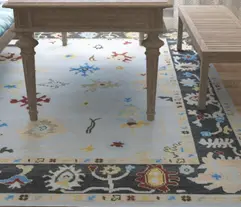
  • Colour Palettes per Rooms: While blues and greens continue to be more evocative than warm colours, your choice of which memory to evoke can allow for super tasteful designs! For living rooms, a sage or slate rug accompanying a cream sectional can create a coastal or perhaps even a farmhouse feel. Meanwhile, a bedroom would appreciate dusty blue rugs, making the room feel like a spa and the white bedsheets look like foamy goodness!
  • Ideal Pairings: Cool colours and warm colours do not mix, which leaves only the true neutral as a good pairing for these rugs, whites. These rugs accompany light grey or white walls with blue undertones excellently! Light oak furnishings and linen fabrics accentuate the cool softness of this colour scheme, and the final picture can be framed beautifully with blue-green ceramics or indoor plants.
  • Additional Tip: An almost sure-fire path to success can be found in a faded blue-green Oushak rug, with a splash of cream accents. This theme creates an instantly timeless appearance in any room, while also hiding wear beautifully within its designs!

Dark Neutrals

rug colors for neutral interiors dark neutralsDark neutrals are the loudest of the minimalist colour schemes, almost a bridge between the neutral and the vibrant. Colours like charcoal, slate, greige or deep taupe create the foundations of a room with drama and personality, without adding many bold colours themselves. These rugs can form the base of the room, and appreciate accents of lighter colours which can give them the contrast and drama they yearn for!
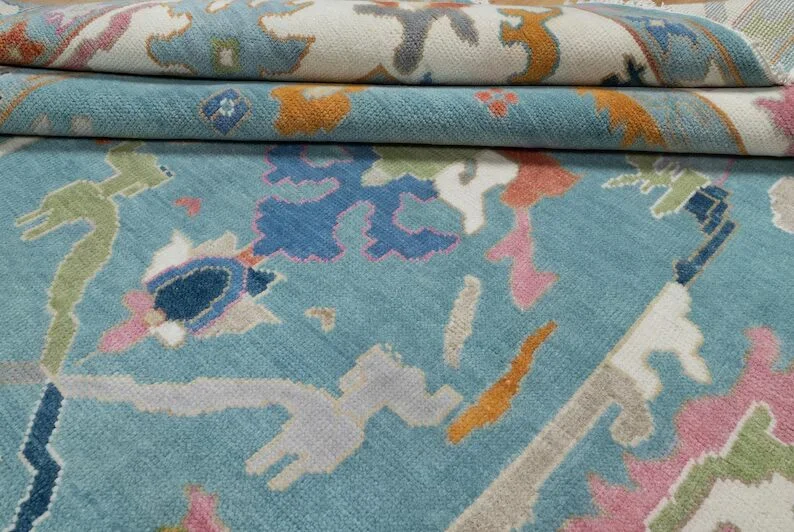
  • Colour Palettes per Rooms: These rugs aim to create a dynamic feel in any room they are added to, displaying character rather than simply warmth or coolness. As such, a charcoal rug under a light linen sofa can mesmerise all who set foot in your living room, while a deep taupe holding your cream or white bed-spread can create a confident, unique kind of warmth. A slate rug can even add functionality to the dining room, as this rocky colour can hide spills and crumbs super well!
  • Ideal Pairings: Despite being neutral, these rugs do add enough colour to the rooms they are a part of. As such, focus on white or very light, beige walls to add contrast while maintaining neutrality. Light oak furnishings and beige upholstery, or if you’re feeling particularly daring, pastel accents can compliment these dark rugs incredibly well! Black metal or glass are also two niche but very exciting features which work well with charcoal rugs!
  • Additional Tip: For smaller spaces, try to achieve a contrast in the rug patterns themselves. You can do this by finding a dark rug with light accents, for example an Oushak with a slate body and ivory designs. These rugs can ground the room and add dimension, without making it feel smaller.

Smart Rug Colours for Neutral Interiors

With these principles in mind, you can achieve three different kinds of effects whilst maintaining minimalism through neutral colour palettes. The first palette generates warmth, the second creates coolness, while the third shows sophistication. It is entirely up to your own taste and home layout to decide which works best for you, home decor is, after all, a form of expression. With the knowledge you are now equipped with, you’re perfectly capable of choosing the perfect rugs for you and designing your own rooms! Put your intentions on full display, and dazzle your visitors with your excellent taste!

What Is a Modern Oushak Rug? History, Features & Styling Tips

The modern era finds with it a return to tradition, with the values of aesthetics and a homely coziness witnessing a revival. The need for a blending of contemporary efficiency with the authenticity of the past garners more attention than ever from design professionals, and in the snug world of rugs, the answer lies in the popular ‘Modern Oushak Rugs’!

History of the Modern Oushak Rug

These rugs are a result of the long traditions of wool-only rugs, from Oushak, Turkey, adopting values from across the world as the local artisans spread their art with their travels. Their rich story of artistic development flows throughout history!

  • Ottoman Origins: Oushak was one of the primary hotspots for style and quality carpet production during the period of the early Ottoman Empire. They were initially used by nomadic weavers for their own personal use, but by the 15th century, found fame the world over for their exceptional wool and natural dyes.
  • European Symbol of luxury: During the Renaissance period, as the mainstream priorities shifted towards aesthetics and class, Oushak rugs became a symbol for luxury. This led to a shift in design philosophies, as the rugs now featured more European patterns like sharp stars and medallions. They were also featured in the paintings of popular artists like Hans Holbein and Lorenzo Lotto, which gave them their other name, Holbein and Lotto Carpets!
  • 19th Century Re-emergence: After a brief stint of carpet production being moved to European makers, the undeniable quality and beauty of the Turkish rugs returned to the markets in the 19th century. These brought with them a blending of tribal and Persian styles, with bright colours like red and blue interwoven with coarser knits.
  • Modern Day Market Leader: The age-old hand-knotting technique of tying the yarn around warp, where each knot brings about a splendid color and design, is more valued today than ever before. These rugs display a softer, more neutral palette with grays and pastel hues, lending more versatility to them. Their making process, which takes weeks, ensures that the Turkish rugs last more than a lifetime!

Features of the Modern Oushak Rugs

With time, these originally Turkish rugs have adapted to various styles, themes and colour patterns, while still retaining their original values of soft textures and clear colour schemes. Modern Oushak rugs deliver the needs of the modern day with their hand-dyed, washed, naturally soft fibre, and provide not only dimension, but a story to any room they call their home!

  • Designs that Never Go Old: These rugs feature timeless designs, blending soft and vibrant colours with abstract, sometimes telling motifs which make for a strong opening to any design strategy.
  • First Choice for Interior Designers: These rugs are often the centerpiece of a room’s feng-shui, as not only are they designed to face the brunt of the wear-and-tear of any piece of furnishing, like constant stomps and spillage, but their colours can also determine the theme or ‘vibe’ of any room.
  • Versatility: These modern-traditional rugs are designed seemingly to go with any kind of flooring you can name. Their rich history lends to the rich variety of colours and patterns, weaving in and out of regional knitting strategies as seamlessly as the threads of the carpet itself.
  • Durability: Beyond simply the use of higher quality, more resistant materials, the Turkish hand-knotting technique makes for denser, more robust rugs than their machine-made kin. They also rely on thicker yarn and looser weaves than other regional rugs, making them softer on the feet yet more abrasion-resistant. Even their colours resist fading under indoor lighting due to the use of vegetable or high-quality synthetic dyes!
  • There’s One for Everyone: Authentic modern Oushak rugs feature large simplistic patterns and detailed motifs, yet come in a variety of modern colour schemes to ensure that every market has exactly what it needs! This foundation also lends itself to contemporary customisation, as you can find the exact colours and patterns you wish to showcase in other areas of your room decor, perhaps the logo of your favourite team or simply your favourite colour scheme!

Styling Tips for Modern Oushak Rugs

Modern Oushak rugs are by nature designed to meet all your needs, be it aesthetics or durability. However, simply having an all purpose solution to your decor requirements can fall flat without good planning. Thankfully, these are easy to solve!

  • Choose the Right Size: These rugs are designed to be the centerpiece of your room’s motion, while also being pleasing to both the eyes and the feet. As such, try to find a rug which covers the room just enough, so that the front legs of your seating rest on the wool. It is also advisable to leave around 8-12 inches of visible flooring around the edges of the rug, to create a ‘framed’ aesthetic.
  • Consider Your Palette: The most modern rugs feature soft colours like sage greens, faded blues and pastels to create a soothing, warm feeling. However, this can lead to a room feeling too neutral, especially in cases where other furnishings do not provide enough colour variation. In such cases, consider buying Oushaks with muted terracotta, dusty rose, or faded gold accents for warmth without overwhelming the eye.
  • Layer and Depth: Layering an Oushak by placing it over a natural jute or sisal rug can create an incredibly striking visual, while also serving several logistical benefits. This set-up helps immensely in maintaining the durability of the fine modern rug, as the layers distribute friction and accordingly the wear and tear between them. Just remember to leave around 7-8 inches minimum of the bottom rug visible, which will make the visual intentional and very, very stylish!

Thus, the rich history of an initially regional tradition, which today dominates the markets due to all its qualities and fame, can be adapted into your own home very easily! Follow these rules, as not only will they make you as knowledgeable as any connoisseur, but you’ll also be more than capable of finding the right Oushak rug for all your aesthetic and comfort needs!

Things to Know Before You Buy a Rug: A Very Honest Guide

We’re going to talk about all things you should know before you buy a rug. Whether you’re planning to buy a wool rug, eyeing a vintage Oushak, or still figuring out your first big area rug purchase, this guide is for you.

And before you think, picking a color and the right rug size is all you need. Think again.   

Start With the Rug (Yes, Really!)

If you decorating a room, I always recommend choosing your area rug first. A rug can set the tone for color, style, and layout. Whether it’s a faded Oushak in powder blue or a bold geometric Kilim, picking your rug first gives you a design anchor to build around. De

Of course, this isn’t a hard-and-fast rule (especially if you’re already bought the bed, table or couch). But in my experience, it makes creating a cohesive room way easier.

Know What You’re Buying (Materials & Construction Matter!)

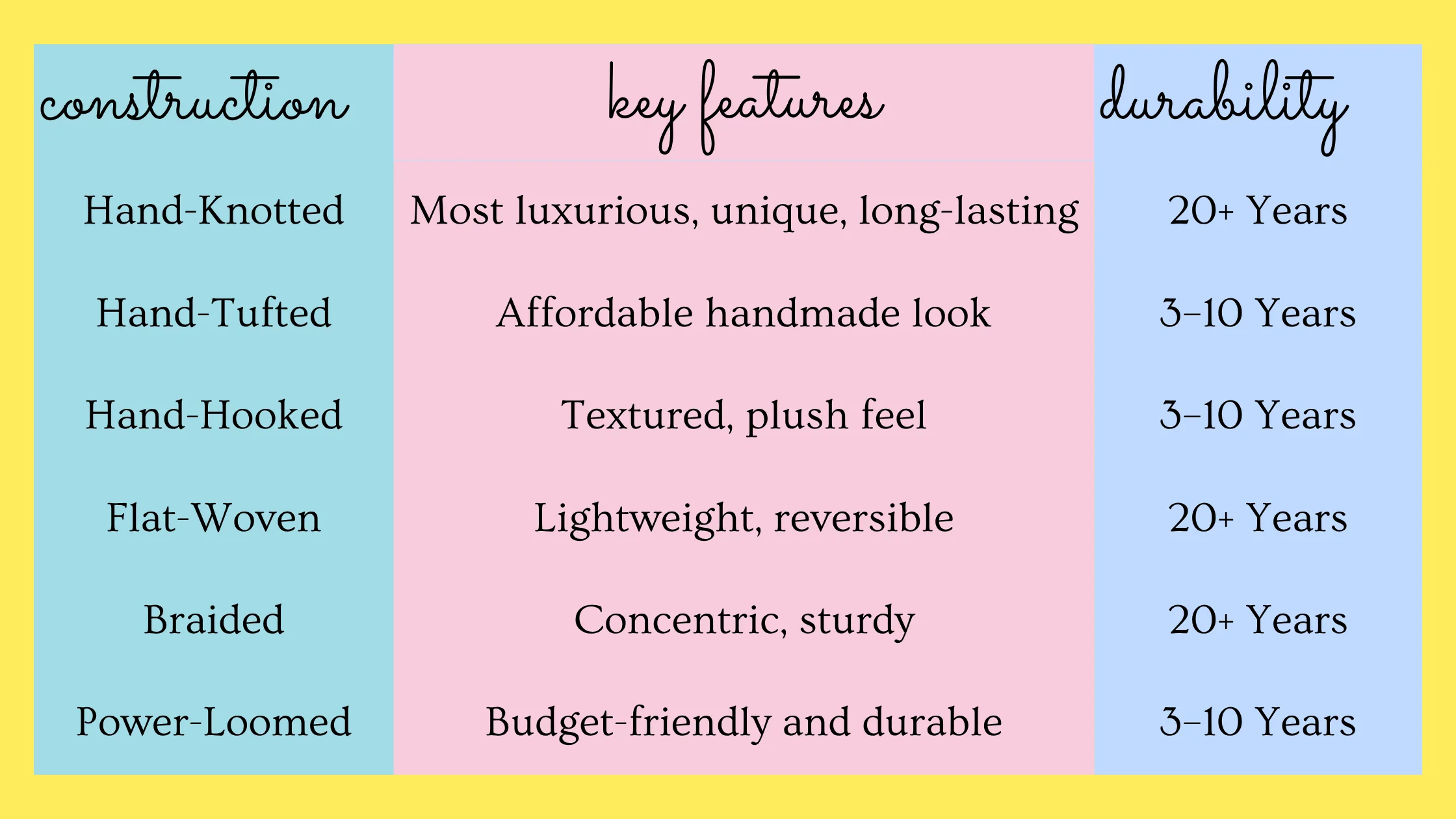
Here’s the truth: not all rugs are created equal. If you want something that’ll last for decades, invest in a hand-knotted wool rug. These are heirloom pieces, made knot by knot, often taking weeks to weave. They’re durable, sustainable, and uniquely beautiful.

I know budget is a big factor when buying a rug. Not everyone has the budget to buy an handknotted Oushak rug. But don’t let it dictate the area rug you pick. The construction and material make a massive difference.

Think of this: do you want a cheap rug that lasts for 3 years max or a good rug that lasts more than a lifetime?

Let’s break it down:

Wool, especially, is my personal favorite. Because it’s soft, strong, stain-resistant, and so cozy. Yes, wool area rug shed at first. But it calms down with care soon. When buying a rug for living rooms, bedrooms, offices, and entryways, they’re the best choice.

Measure Twice, Buy Once

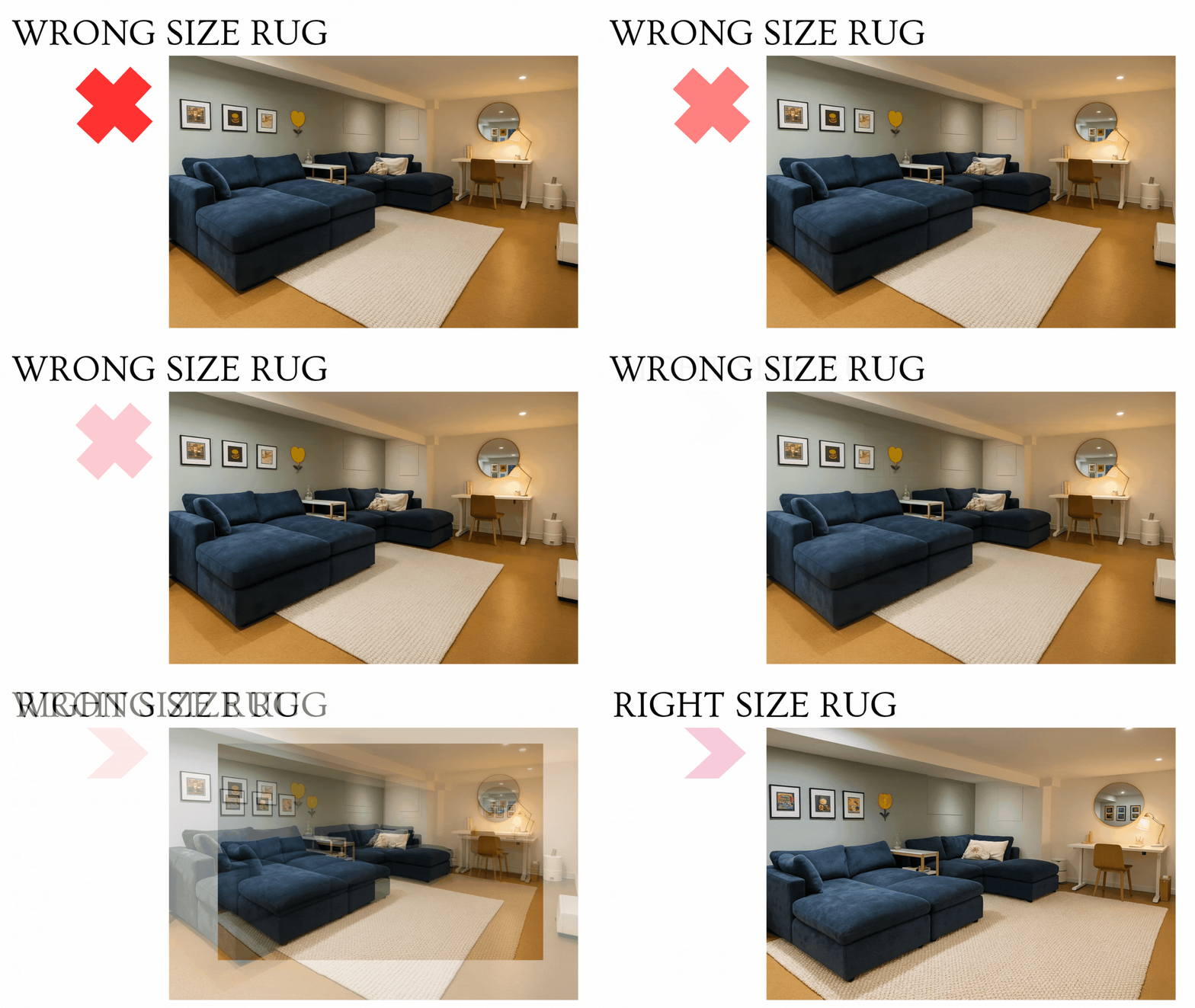
Always measure your space. Then finalise the minimum and maximum dimensions of the area rug before you start browsing. It’ll save you so much second-guessing. Once you have the size and shape of the rug finalised, you can move on to color, style (traditional, transitional or modern) and type (Oushak, Turkish, kilim, gabbeh).

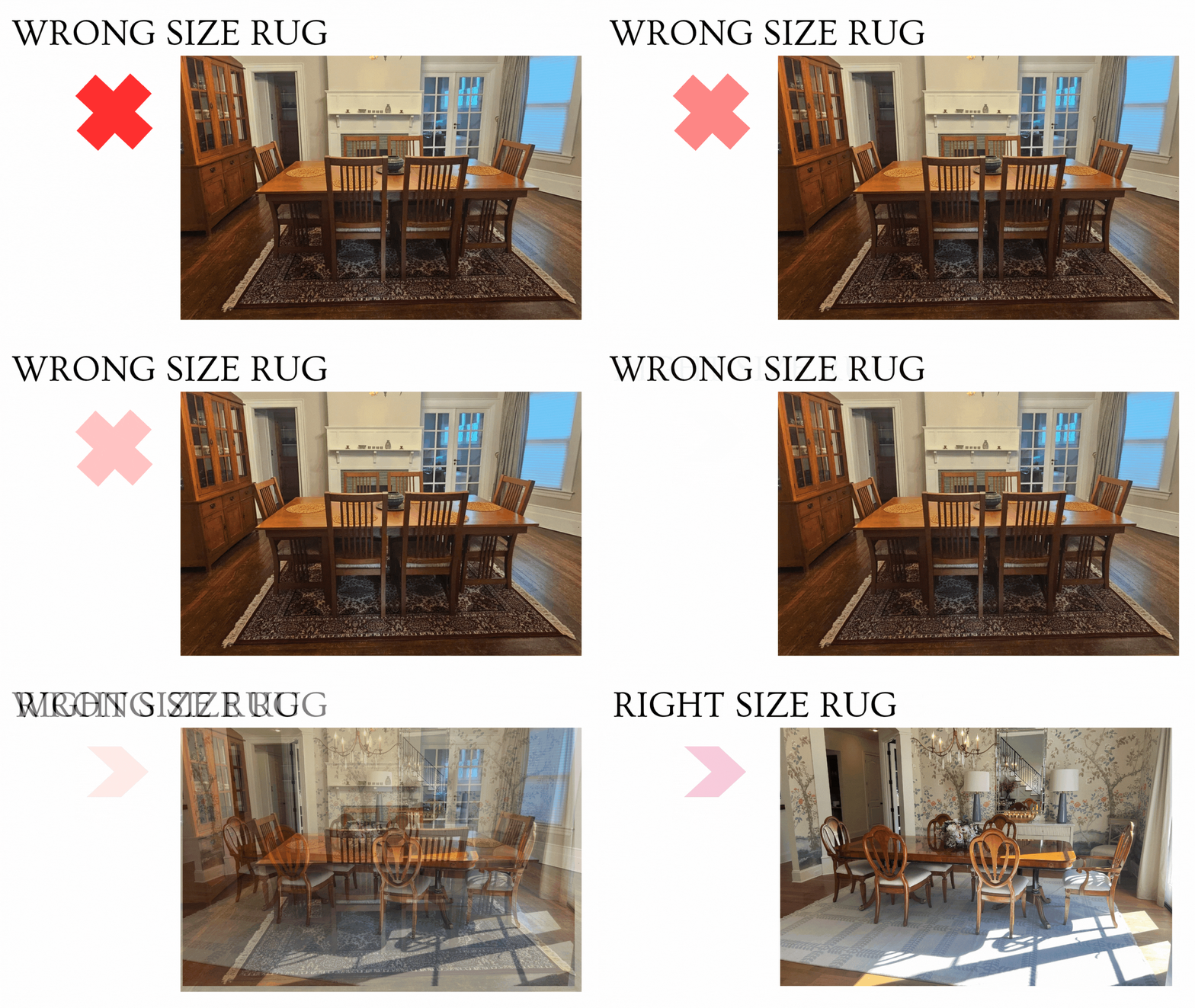
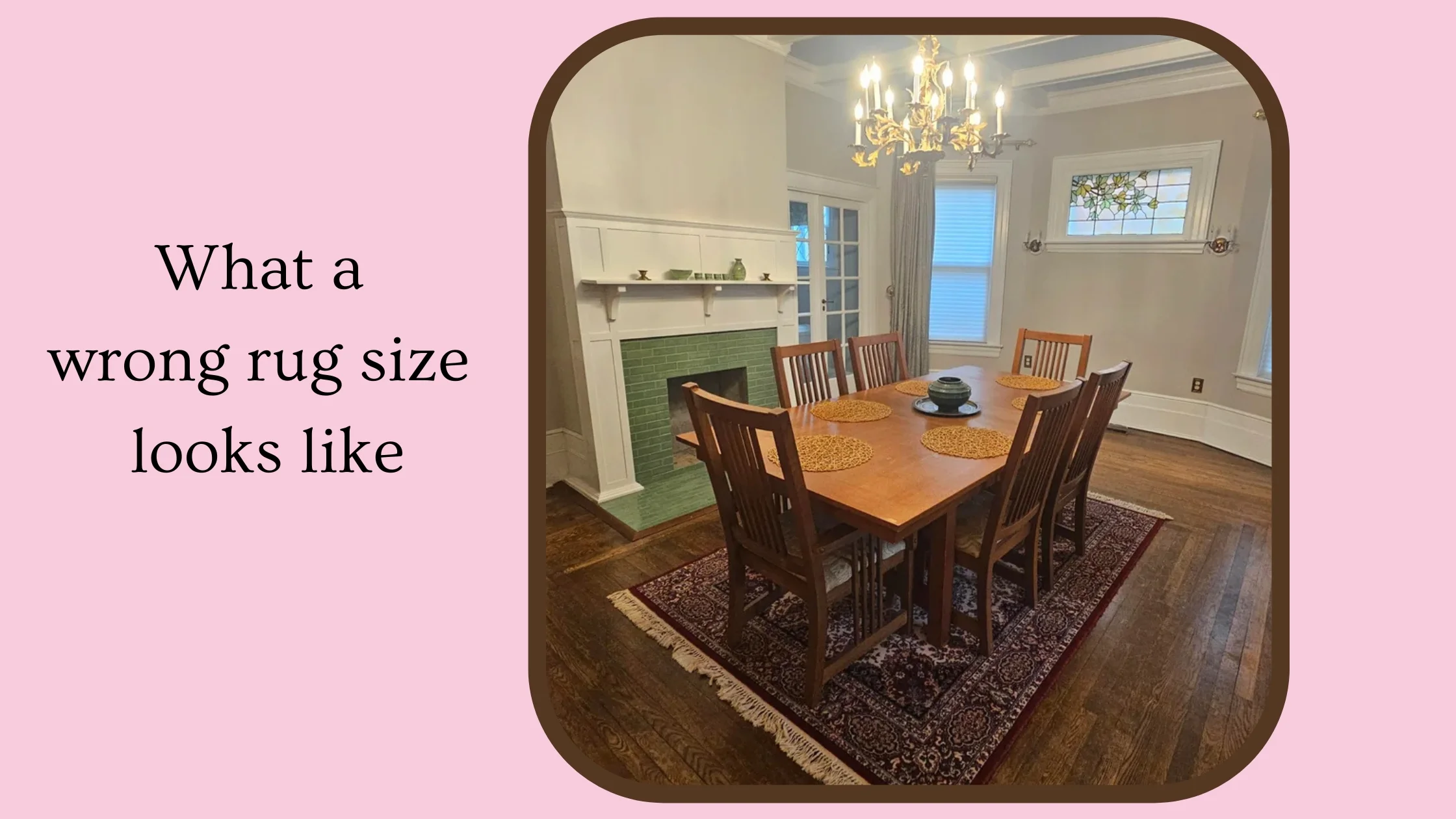
Why is the size so important? Because it can make (or break) the whole look of the room.

A rug can be too short but can it be too big? Yes. You want it to define a space, not swallow it. Need help choosing the right size? Read all Rug Size Guide Tips here.

Lighting Changes Everything. So Ask Questions!

Here’s a tip from behind the scenes: the way a rug looks in photos isn’t always how it shows up in your space. Lighting makes a huge difference. Oh my god, so much difference. No matter how accurately you try to photograph them, white or yellow light will change the shade.

https://www.instagram.com/reel/C6Oc0z1JNei/?igsh=MXFqaHZnMWRwb3M2eQ%3D%3D

So, always ask the seller if the photo was taken in natural or artificial light. If you’re shopping online, don’t hesitate to request more pics.

And remember: whether you buy a rug online or offline, the look will shift slightly once it’s in your home based on the light the room has. That’s totally normal.

A Rug Pad = Game Changer

This is a contested pointer. A good quality wool rug doesn’t need a rug pad. That’s the whole point of handknotted rugs. They’re thick and durable enough to stand (or is it lie?) alone. If you’re choosing a washable or power loomed rug, then you’ll need a rug pad.

They are thin and a rug pad will protect your rug, prevent sliding, and add softness underfoot. It may feel like an extra purchase, but it seriously extends your rug’s life.

Buying an area rug?

Should all the rugs in my house match? Nope! Rugs are like art—each one should tell its own story. Just make sure the colors complement each other if they’re in view from the same room.

Does a rug make a room look smaller? Only if it’s too small. The right size rug will actually make your room look bigger and more pulled together.

Final Thoughts From Ashni

The right rug grounds your room, adds soul, and brings everything together. So don’t rush buying a rug.  Ask questions. And when in doubt, drop a message on my Etsy store. I’m always happy to talk rugs.

Ashni,

XOXO

How to Clean Wool Area Rugs Without Damaging Them

Rugs are magical portals to a world of comfort and coziness. They make our homes feel warm, inviting, and just a tad bit fancier (if you pick the right rug size). But let’s face it, over time, wool area rugs tend to collect more crumbs and pet fur than a couch potato’s snack tray. Here’s how to clean rugs made with 100% wool

First, shake it off

Let’s start with the basics of cleaning rugs.

Take it outside and give it a gentle shake. Not a tug-of-war, but enough to loosen up dust and dry debris. Lay it over a railing or clothesline and beat it softly with a broom handle. Trust me, you’ll be surprised what comes out.

Bonus tip: Don’t do this in your Sunday best—the dust cloud is real.

Vacuum smart (but gently!)

Vacuum your rug once a week. It’s like giving it a mini-spa day. Don’t use a rotating brush or beater bar to vacuum wool area rugs.  Use a clear head that has no rotating component. Set it to the lowest suction.

Always vacuum with the pile direction not against it. What does that mean?

If you move your hand on a wool rug (parallel to the length), on one side your hand will glide smoothly. In the reverse direction you will feel some resistance from wool pile. Always move your vacuum in the direction the hand moves smoothly. This keeps the fibers intact and prevents fuzzing. If your rug has fringes, skip them completely. They hate vacuums.

Spot clean, don’t soak

Spill something? Don’t panic. Accidents happen, folks.

The trick is to get rid of pesky stains RIGHT AWAY! Act fast. When you clean rug spills while they’re still wet, the stain doesn’t set in. Here’s how you do it:

  • Mix warm water with a bit of dish soap, and dab the affected area using a clean cloth or toothbrush.
  • Or you can sprinkle some baking soda on the stain, add warm water, let it sit for a bit, and then gently dab with a clean cloth.

Don’t scrub. Dab. Be gentle. Be kind. The key is persistence. Blot. Blot. Blot. Until the stain gradually fades. This Instagram reel  (not mine, but it mirrors my process) shows exactly how to clean rugs made with wool. Let the section air dry completely. No heat. No hair dryers.

Since my area rugs use vegetable dyes and are weaved with natural wool, spot cleaning won’t cause any shrinking or color bleeding!

Air it out, naturally

Rugs love a little vitamin D.

Once in a while, give your rug a sunbath. Just not for too long. A couple of hours in gentle morning sunlight helps eliminate odors and refreshes the wool. Avoid harsh midday rays, which can fade colors. Flip it to let both sides breathe. Clean rugs love airflow.

Leave it to the pros

Sometimes, wool area rugs need a little extra TLC. If the stain is serious or rug hasn’t been cleaned in years. That’s where the professionals come in. Give the rug to a local, trusted cleaner once every few months

What not to do with wool area rug

  • Don’t steam clean or use harsh chemicals
  • Don’t hang wet rugs on a line (the weight can stretch them)
  • Don’t scrub with stiff brushes
  • Don’t toss them in the washing machine, ever!

Wool rugs are like good friends. They just need a little love and regular care. A light routine goes a long way. And if you’re ever unsure, send me a message. I’d much rather talk you through a coffee spill than see your Oushak in distress!

Stay cozy, and keep those rugs spick and span,

Ashni

XOXO

P.S. If you’re looking for a low-maintenance, high-style area rug, check out our hand-knotted wool collection. They’re made to last.

How to Decorate In Scandinavian Style With Kilim And Oushak Rugs

If you’re anything like me, you love a home that feels both calm and character-rich—and that’s why I absolutely adore neutral Swedish interiors. The clean lines, calming colors, and cozy textures… and of course, the Scandinavian style rugs.

Yes, I start with the rug. Always. Because a rug grounds a space, sets the tone and adds that whisper of warmth every Nordic-inspired room needs. Scandinavian-style rugs are perfect for minimal, modern homes with soul.

Their beauty in their versatility. The neutral tones and timeless designs transition easily across seasons and styles, making them a long-term investment in both function and aesthetics.

Let me show you how to layer these handmade, plush Kilim beauties into your hygge-inspired home with ease.

Kilim & Oushak rugs: both are for Scandinavian style

If there’s one thing I love about Scandinavian design, it’s how it manages to create airy, functional spaces that still feel warm and personal. Clean doesn’t have to mean cold. And that’s where rugs shine.

  1. Kilim rugs? Oh, they’re the stars of Nordic-style interiors. They bring texture and rhythm. Lightweight, geometric, and unfussy—they get just the right amount of grounding to open spaces.
  2. But Oushak rugs are great for Scandinavian-style interiors too. They offer subtle patterns and muted colors that complement pale woods and white walls.

And the best part? Both are handwoven, making them a natural match for the Scandinavian love of sustainable design and thoughtful living.

Choosing the right Scandinavian-style rug

Now, let’s talk about choosing the right rug. That one piece that makes the whole room come together. In Scandinavian interiors, it’s all about light, breathable textures, and tones that feel like nature’s palette.

Here’s what I look for:

Not sure what size or color works best? Choose a custom rug so you never have to compromise on fit or tone.

Where to put Scandinavian-style rugs in your home

  1. Living Room: Opt for a generously sized 9×12 or 8×10 rug in soft, neutral tones of cream or beige to anchor your living space. Let the kilim rug set the tone for a neutral, grounded space. The muted palette and texture complement any Scandinavian-inspired decor without overpowering the room. Place all furniture pieces – sofa, chairs, and coffee table—on the rug to create a sense of unity.
  2. Dining Room: An abstract flatweave Kilim adds texture without bulk and makes chairs easy to slide. Choose simple patterns that mirror Scandinavian minimalism. Use a 9×12 or 8×10 rug for a dining table seating 6 to 8.
  3. Bedroom: Layer a muted Kilim rug under the bed for softness and visual warmth. Pair it with linen bedding and light oak furniture. For the children’s room, lay an ivory Scandinavian-style runner between twin beds for a symmetrical, cozy look.
  4. Entryway or Kitchen: Opt for custom Kilim runners to add a functional yet beautiful touch. These work especially well in white or pastel-toned kitchens.
  5. In Open-Plan Spaces: Scandinavian rugs are ideal for creating defined zones without disrupting the visual flow. Use a flatwoven Kilim under the dining table and a plusher antique washed Oushak rug in the living area—sticking to the same tonal family ensures the space stays cohesive. These subtle rugs help carve out purposeful areas while maintaining an airy, open feel.

Cool-toned and neutral Oushak rugs add a subtle pattern to the Nordic style.

Scandinavian style is built on a foundation of simplicity, light, and softness.

But too much minimalism can feel flat or cold. That’s where cool-toned and neutral Oushak rugs make a difference.

These rugs often feature soft ivory, powder blue, sage green, and faded terracotta, paired with traditional motifs that are barely there. But just enough to draw the eye.

They complement pale woods, white walls, and linen textures while quietly warming up the room. Think of them as visual whispers: subtle but grounding, decorative but never distracting.

Whether underfoot in a living room or layered into a bedroom, a neutral-toned Oushak rug helps keep the serenity of Nordic style intact

Warm up modern spaces with handmade rugs

Scandinavian style is more than white walls and modern furniture. It’s about how each piece in the room makes you feel. A handwoven Scandinavian-style rug—whether it’s a geometric Kilim or a faded floral Oushak—adds depth, comfort, and craftsmanship to clean, modern interiors.

Browse our Etsy shop for the perfect Scandinavian-style Kilim or Oushak rug, or send us a message to start a custom order.

Ashni,

XOXO


What’s the Right Oushak Rug Size for Every Room

If you’ve ever fallen in love with an Oushak rug only to realize it just doesn’t fit right in your space, you’re not alone. One of the most common mistakes people make is choosing the wrong rug size. Whether you’re decorating a cozy bedroom, a formal dining room, or a spacious living area, this guide will help you confidently choose the right Oushak rug size for every room in your home.

Why is the right rug size so important?

Always start with selecting a rug first before you pick anything else in a room! An area rug is a statement piece, which makes it the hardest thing to find. It anchors the room, defines the furniture layout, and instantly sets the mood.

The wrong size, even with the perfect design, can throw off the whole balance of a space. Plus, the price jumps a lot as you size up. So, you don’t want to be stuck with a costly rug that doesn’t fit the room for life.

The living room rug size should anchor and frame the space

Best Oushak rug sizes: 8×10, 9×12, 10×14

A common mistake is choosing a rug that floats under the coffee table but doesn’t reach the furniture. Your living room area rug should ground the entire seating area.

  • For small living rooms: Use an 8×10 Oushak rug where the front legs of all furniture pieces sit on the rug.
  • For medium to large living rooms: A 9×12 or 10×14 rug will let all legs rest on the rug, creating a complete and cohesive space.

Tip: Leave about 12-18 inches between the rug edge and your walls. Want an exact fit or rug of odd size like 7×10? We offer custom Oushak rugs sized to your layout.

The dining room rug must fit the table & chairs

Best Oushak rug sizes: 8×10, 9×12

Your rug should be large enough for all dining chairs to sit comfortably, even when pulled out. How do you calculate that?

  • Add 24-30 inches to each side of your table to find the right rug size.
  • A 6-seat dining table typically needs at least an 8×10 rug.
  • An 8-seat table looks great with a 9×12 Oushak rug.

Tip: Washable rugs are great but they are thin, which means they fold when you slide dining chairs after sitting on them. Choose a 100% wool rug for dining rooms. They are thick, durable, and easy to clean, even in high-traffic dining areas.

Bedroom rugs mean softness underfoot

Best Oushak rug sizes: 6×9, 8×10, 9×12

A bedroom rug should go beyond the bed frame and give your feet a soft landing.

  • For a queen bed: Choose an 8×10 Oushak rug that extends on all sides.
  • For a king bed: A 9×12 rug creates balance and luxury.
  • For smaller rooms, place a 6×9 rug under the lower 2/3 of the bed.

Have tight corners or bed frames with footboards, opt for a custom rug size. We’ll size your Oushak rug to fit just right.

Entryway & Hallway Rugs Set the Tone

Best Oushak rug sizes: 2×3, 2.5×6, 3×8 (runners)

In small spaces like entryways and hallways, rugs set the tone. Here’s how you find the perfect Oushak rug runner size:

  • Measure the length of your hallway and subtract 6 inches from each end.
  • For an entryway, pick a rug that leaves at least 6 inches around all sides.

My final tips for finding the right Oushak rug size

Always measure your space (and double-check!) before purchasing. If I had a penny for each time a customer asked us to change the rug size because they measured it wrong, I’d be a billionaire. No jokes.

If you’re like me and love to visualize things, use painter’s tape to visualize the rug footprint to find the right size. Our Oushak rugs don’t need a rug pad because they’re made from the best quality NZ wool. But if you’re buying low-quality ones due to budget limits, buy a rug pad to protect floors and extend rug life.

And, finally, when in doubt, size up. A too-small rug shrinks the room visually. As Nesting with Grace says in her blog, “going bigger the majority of the time is better.”

Explore our Etsy shop to find your perfect fit, or message us for a custom quote.

Ashni,

XOXO